Drone Wall · Case study

Leipzig/Halle airport, August 2026

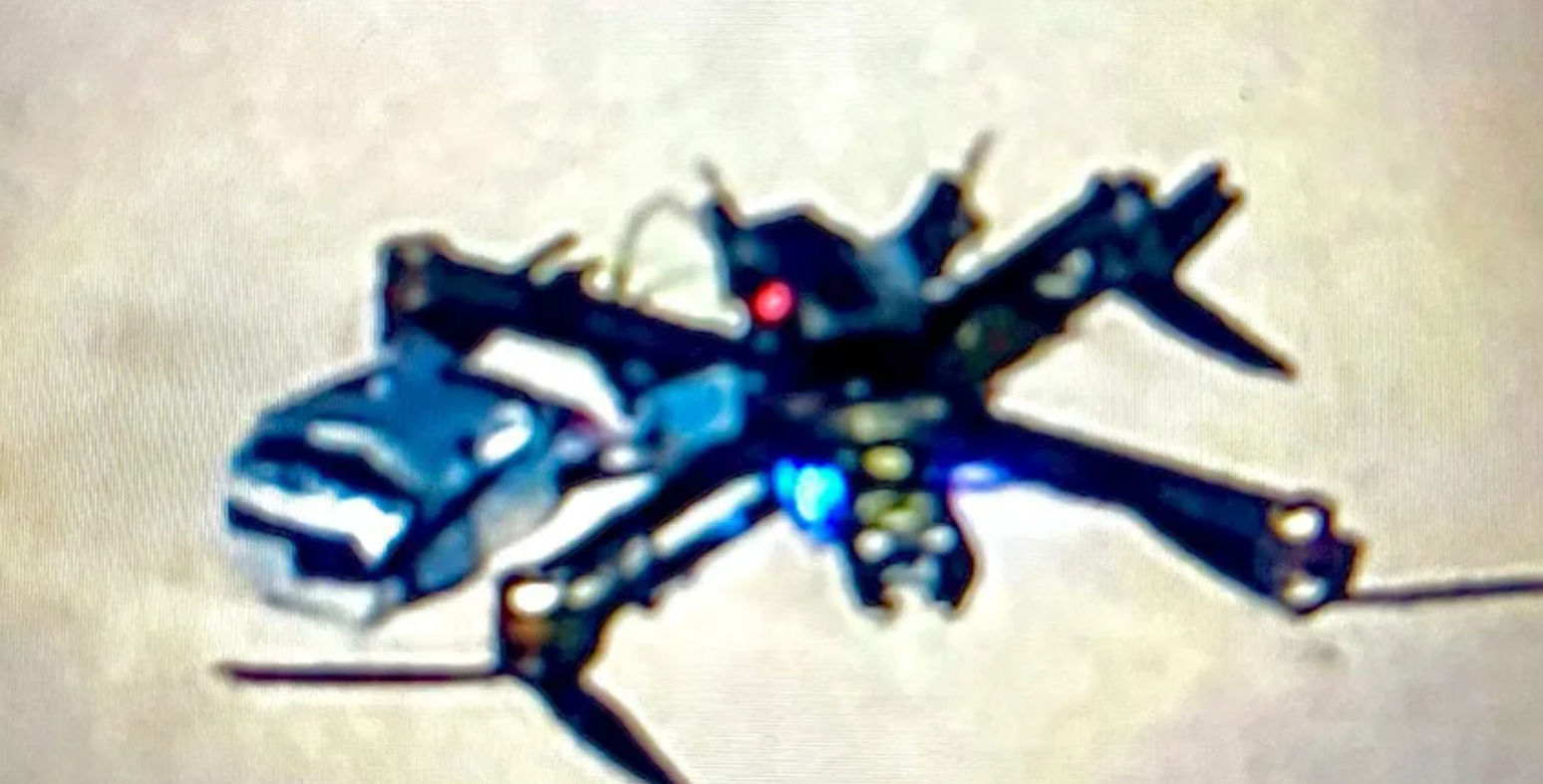
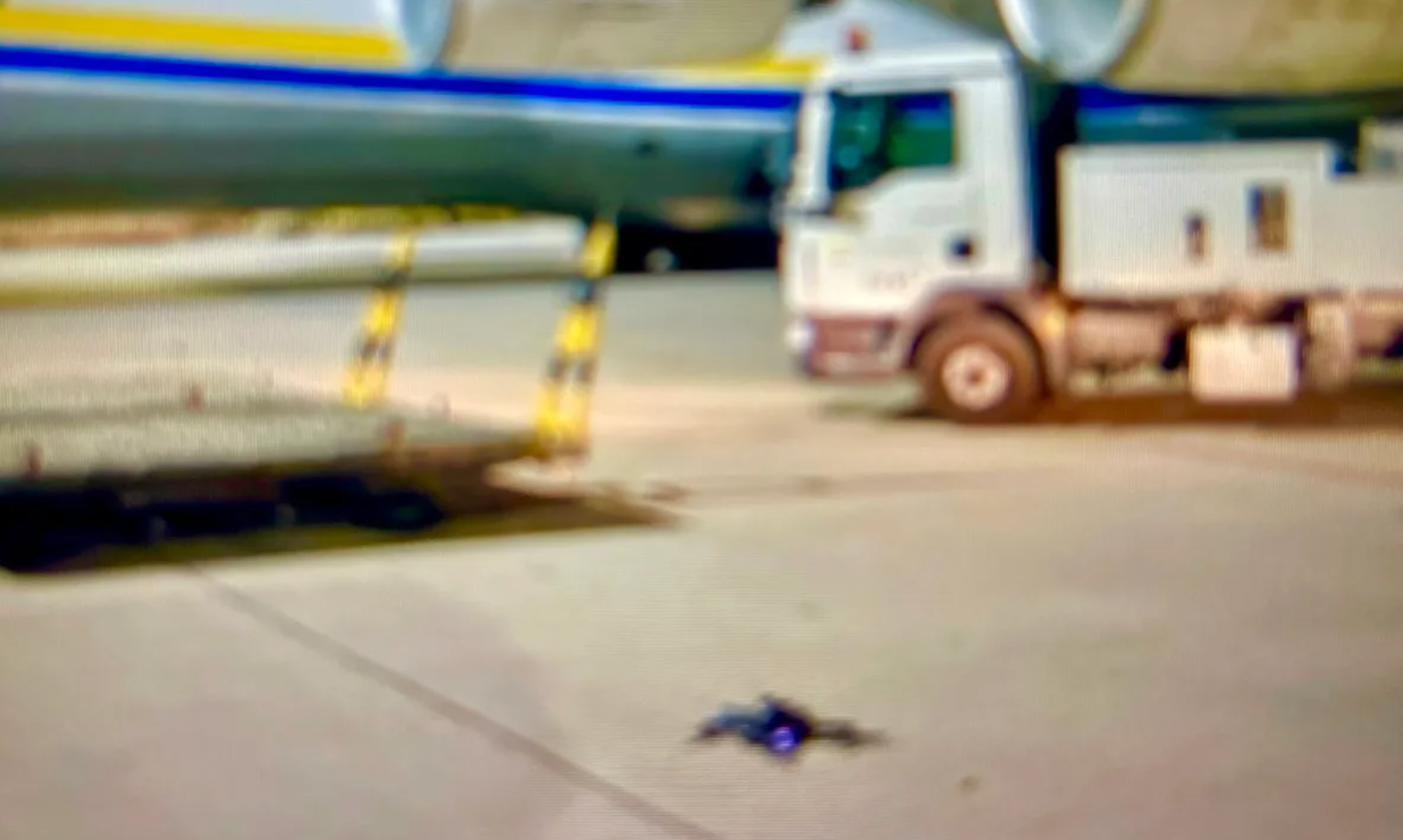
On August 4, 2026, around 19:30, a custom FPV quadcopter with a mounted explosive charge flew into a parked Ukrainian An-124 transport aircraft. The charge failed to detonate as the drone bounced off the airframe and fell to the ground. Unable to take off again and separated from its charge, it was discovered around midnight by an airport bus driver.

Close-up of a black FPV quadcopter with a charge attached to its frame
The drone after it fell to the ground. Photo: Die Welt.
The drone lying on the apron beneath the wing of the An-124, next to a service truck
The drone on the apron next to the An-124. Photo: Die Welt.

What happened next

  • Press reports say the charge probably failed to fire because of a faulty detonator.
  • Minutes later, a DHL freighter aborted its landing after an object about 30 cm across struck its tail. It flew on to Hanover with minor damage. No wreckage has been recovered.
  • Both runways closed. The north runway reopened after about two hours.
  • On August 11, investigators found an antenna fixed in a tree, next to charred electronics and debris, and the trace of an explosion. Reports place it in Kursdorf, a village inside the airport boundary, about 2 km from the apron.
  • Multiple local reports of an explosion sound being heard in the area around 19:30.
  • On August 14 and 15, investigators found a third drone and about 50 g of a suspected explosive in a field at Großkugel, about 2 km from the airport edge.
  • The Federal Prosecutor and the federal criminal police (BKA) are investigating the case as of October 20.
  • On September 1, Germany's interior and foreign ministers formally attributed responsibility to Russia. Named suspected participants include Oleg Levushkin, Andrei Karshakov, and Denis Smolyaninov, a GRU operative. Previous involvement in deep sabotage operations, as well as contacts with arms dealer Andrei Usachev, were reported by independent media.

Drone type and control method

Most custom FPV quadcopters use ELRS, a wideband signal, for command and control on the 2.4 or 900MHz bands. THey also most commonly transmit video on 5.8GHz. In this standard configuration, the extra antenna in the tree could have been a radio relay to extend range. However, ZDF reported that one drone carried 5G antennas, which complicates the picture. 5G/cellular-controlled drones exist, but then the use of the smaller antenna is not clear, since 5G coverage is expected to be good in the area. Hybrid setups, where 5G/LTE is used as a backhaul into a small relay station that broadcasts more conventional signals, have also been proposed (which still contradicts the onboard 5G statement). Open data confirms 5G antennas are present for all three major operators in the area.

Investigators have not confirmed the control method or where the pilots were.

A layout for Leipzig/Halle

From a security standpoint, the airport has an unusual problem. The A14 motorway, a high-speed rail line and several public roads cross the site between the two runways. Someone can stop a car on one of the parkings and launch a drone without crossing the fence.

This makes it very likely that Leipzig was chosen specifically for its weakness. Unlike Frankfurt Airport, it had no FPV-defense measures in place. From initial enquiries and reports, we can reasonably conclude that the attack was planned in great detail, with three, likely 4 drones (the one that bounced off the Antonov (found), the one that hit the DHL plane (lost), the one in Grosskugel (found), and the destroyed one near the tree (lost)), but ultimately suffered from poor execution, possibly by insufficiently trained operatives.

These drones, even if using fully cellular control, are identifable and trackable using audio and visual tracking.

The map shows where Drone Wall stations would go if we guarded both the boundary and these public routes. We placed them with fixed rules on OpenStreetMap data of the site. Use “Show on map” beside each find to see where it was found.

Incident evidence, as reported

Apron 2: drone with explosive charge

Found a few metres from stand 213, next to four An-124s, on August 4. Stand 213 sits on Apron 2 by its numbering. We did not find its exact position.

Kursdorf: antenna, electronics, scorched ground

Found from August 11. The marker is the centre of the administrative boundary. The exact location has not been published.

Großkugel: third drone and suspected explosive

Found on August 14 and 15 in a field in Kabelsketal. The exact location is unknown, so we show a 1.5 km circular area.

The object that hit the DHL freighter near the fence. Its position has not been published.

Sensor layout

Layers

Map data © OpenStreetMap contributors. Imagery © Esri, Maxar, Earthstar Geographics. Sensor positions are a planning exercise. No equipment is installed at this site.